
Ferragamo Archive Bags, Read Properly: Sofia, Fiamma, Ginny and Trifolio
Several of the most recognisable ferragamo bags are simply not available new. Outside the current United States line-up sit Sofia, Fiamma, Ginny and Trifolio, together with names such as Wanda, Boxyz, Margot, Today, Seila, Lotty, Trapezio, Joanne, the Smile Hobo, the Charming Tote and the Gancio Lock Tote. They live on in the second-hand market, kept circulating by a generation of owners, and the prices quoted below were observed as 2026 market prices on 7 September 2026 rather than taken from any official list. Call it a working archive rather than a museum: a set of models that people still carry. To read it properly you have to separate three things that get routinely confused online, namely a bag, a shoe and a person. That separation is the starting point here.
How a Shoemaker’s House Came to Make Bags
Salvatore Ferragamo founded the house in 1927 and built it wholly on footwear, working out of Florence and, eventually, Palazzo Spini Feroni. He had studied human anatomy in the United States before returning to Italy, and the reputation that followed him was a shoemaker’s reputation. Bags followed later, out of the next generation. In 1965 Fiamma Ferragamo began designing bags and small leather goods as accessories to the shoes, and the first press article featuring a Ferragamo bag is dated 1969. Nearly four decades separate salvatore ferragamo purse the two, and that explains a great deal about the archive, because the early bags were conceived as companions to footwear rather than as a separate discipline. It also explains why so much of the bag vocabulary, including its most famous hardware, borrows from the shoe side of the house.
Sofia: One Name Covering Two Different Bags
Nowhere is the archive’s capacity to confuse clearer than with Sofia. The older Sofia is a genuine resale classic and one of the names platform editorial reaches for when listing the house’s recognised models. A Ferragamo Sofia 2026 shoulder bag is at the same time part of the current line-up, observed at $2,700 in medium and $3,200 in large. They are not the same bag, so a listing reading only “Sofia” says next to nothing until the photographs are examined. Officially it is Sofia with an f, although at least one retailer lists it as Sophia, which is worth typing both ways when you search. Treat the name as a family rather than as a single object and the listings stop contradicting each other.
Fiamma: A Person Before a Product
Fiamma Ferragamo is the reason this house makes bags at all; a bag later took her name. She started the bag and small leather goods line in 1965, and in 1978 she designed the Vara, the low-heeled pump with a grosgrain bow that went on to sell more than a million pairs. A Fiamma bag does exist in the archive and appears in resale listings, where editorial regularly names it among the classics. What it is not is a current model, and it should not be confused with her wider body of work. The same care is needed with Wanda, another archive name: Wanda Ferragamo was the founder’s wife and Fiamma’s mother, while a Wanda bag turning up in resale and outlet channels is a product named after her rather than the woman herself. The single most useful habit when reading archive listings is holding the people and the products apart.
Ginny: A Shoe Detail Transplanted Onto a Bag
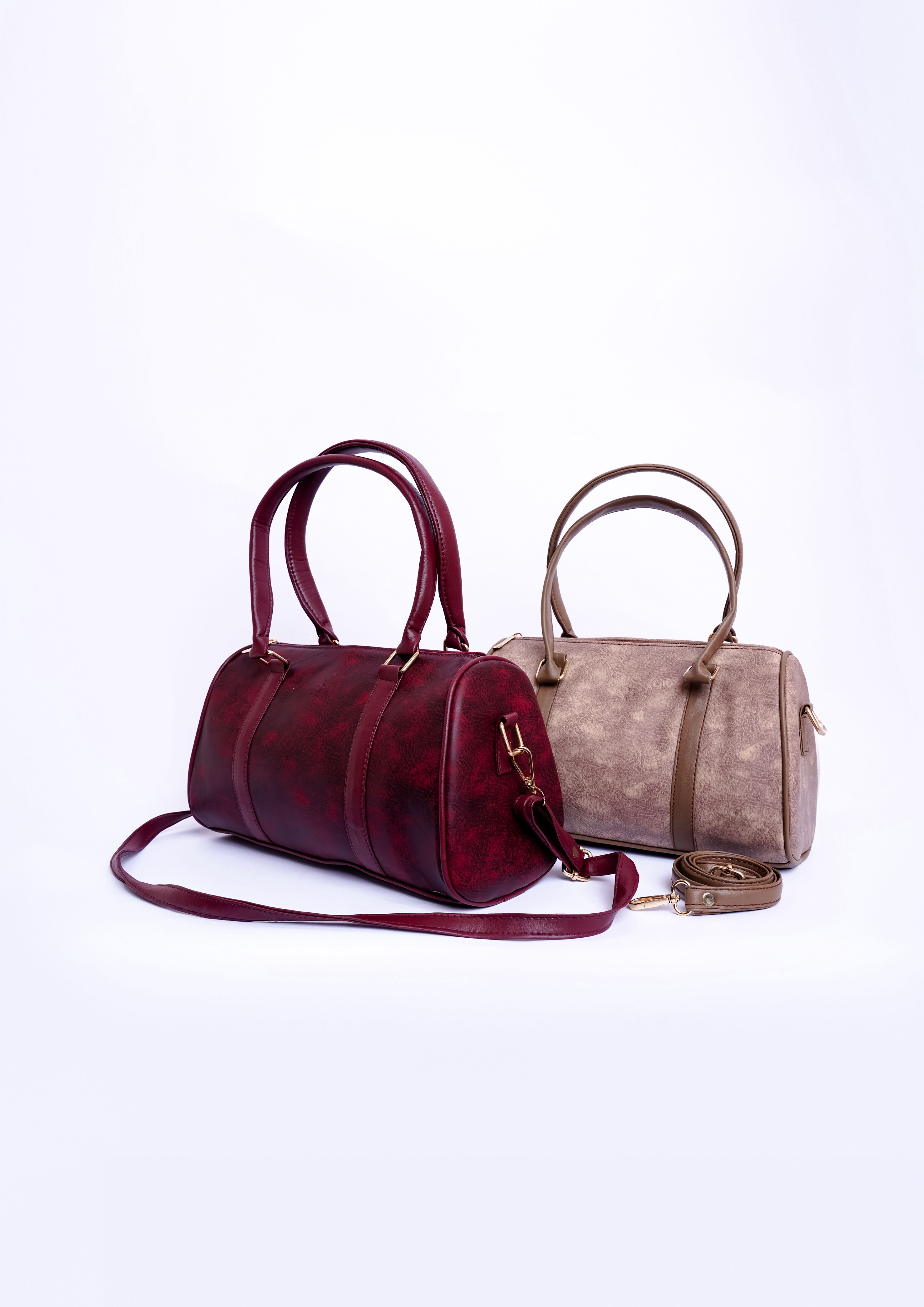
The Ginny is where the borrowing becomes literal. It is a bowling-style bag carrying the Vara bow and plate, and one of the names resale editorial treats as a recognised classic. The essential point, and the one most often mangled, is that the Vara itself is a shoe and has never been a handbag line. The Vara is the 1978 pump described above, and it reaches bags only as a transplanted detail: a bow, a plate, a piece of visual shorthand. A mini Vara-plate convertible bowling bag turned up at $870 on the second-hand market, placing it in the middle of the archive band. Anyone advertising a “Vara handbag” as a distinct line has misunderstood what the name refers to.
Trifolio: No Longer Listed in the US Line-Up
The Trifolio is the strongest performer in the archive and also the most delicately worded case here. A large Trifolio tote in Gancini-embossed leather was observed at $2,040, the top of the archive band by a clear margin and close to where used Studio pieces sit. Its status, though, needs stating precisely: the collection page for the United States now returns a not-found error while an Australian page remains indexed. Enough, then, to say the Trifolio is no longer in the US line-up; not enough to call the model dead, because the house has said nothing publicly in either direction. Line-ups differ from region to region as a matter of routine, and pages appear and vanish for reasons that have nothing to do with a model ending. If you want one, buy it as an archive purchase rather than waiting for a restock nobody has promised.
The Rest of the Archive and Its Prices
Under the named classics lies a long tail of practical styles that once did the everyday work of the collection. Today, Boxyz, Charming, Joanne, Lotty, Seila and the Smile Hobo were observed between $500 and $945, the floor of the whole market. Pieces carrying heritage hardware sit just above, at a small premium, with a medium Gancini turnlock flap at $1,130 to $1,190 and a Margot hobo at $1,020. That hardware has a documented origin: a photograph published in an American trade paper in 1972 showed a Ferragamo bag with a hook-shaped metal closure, the first appearance of the motif. Each figure below is a single platform’s snapshot on a single day, and asking prices are not sale prices. The table gathers the models discussed here with their status and their observed 2026 market prices.
| Bag | Line-up status | Resale price observed, 2026 | Note |
|---|---|---|---|
| Trifolio Tote, Gancini embossed, Large | Out of the US line-up | $2,040 | Top of the archive band |
| Sofia, earlier version | Not current; a Sofia 2026 is in the line-up | No figure in this snapshot | Named a classic by resale editorial |
| Fiamma | Not in the current US line-up | Not recorded in this snapshot | Named the same as the designer of the bag line |
| Ginny, Vara-plate bowling bag | Not in the current US line-up | $870 (mini) | Bears a bow taken from a shoe, not from a bag |
| Wanda | Not in the current US line-up | Not recorded in this snapshot | Takes its name from the founder’s wife |
| Gancini Turnlock Flap, Medium | Absent from the current US line-up | $1,130–$1,190 | A premium for heritage hardware |
| Margot Hobo | Not in the current US line-up | $1,020 | A slouchy Gancini piece |
| Today, Boxyz, Charming, Joanne, Lotty, Seila, Smile Hobo | Outside the current US line-up | $500–$945 | The archive floor |
How to Buy From the Archive Without Getting Caught Out
Archive shopping is a different exercise from walking into a ferragamo shop, and the first difference is the name that appears on the listing. The brand mark became simply Ferragamo in 2022, yet the listed company remains Salvatore Ferragamo S.p.A., and resale platforms have followed the company, which is why Rebag, Fashionphile, The RealReal, eBay, 1stDibs and Vestiaire all still file these models under the older name. Run both searches: a seller who uses only the short mark and a seller who writes salvatore ferragamo are talking about the same salvatore bag. Remember first that the house publishes no authentication guide, so the checks discussed on consignment blogs are third-party consensus rather than brand instruction. Read condition off the photographs rather than the adjectives, checking corners, handles, linings and hardware plating. Three habits are worth holding on to.
- Ask for measurements, since archive names covered several sizes over the years.
- Compare at least three listings of the same model before deciding what is normal.
- Price a current alternative too, including whatever a seasonal ferragamo sale happens to hold.
What Keeps the Archive Relevant
The archive holds the house’s real history with bags, and it tells a different story from the shop window. The boutique leads with the Hug, the Cara and the Studio Bag; the second-hand market keeps returning to Sofia, Fiamma, Ginny and the Gancini flaps. Neither view is wrong, and it is holding both that makes someone a genuinely informed buyer of salvatore bags. There is a plain practical argument too: $500 to $945 buys Italian-made leather goods from a house whose current entry point sits well above that. What you surrender is newness, warranty comfort and choice of colour; what you gain is a piece that has already proved it lasts. For anyone building a collection rather than buying a single bag, that trade is usually the right one.
